

2026 Annual Report
Reporting period: June 2025 – June 2026
The AMR Register
A shared resource for the AMR research community
Antimicrobial resistance (AMR) continues to contribute substantially to global morbidity and mortality. The latest comprehensive estimates, based on 2021 data, associate bacterial AMR with 4.71 million deaths worldwide, including 1.14 million deaths directly attributable to resistance. Effective surveillance is essential to understanding how resistance is changing and where new threats are emerging.
Some of the largest sources of antimicrobial susceptibility data come from industry surveillance programs. Yet historically, these datasets have been held separately, with differences in access and structure limiting their use in broader analyses. The Vivli Global AMR Register was established to address that gap by bringing surveillance data from multiple contributors into a single, harmonized resource that researchers can access and analyze together.
Four years on, the register has grown into a substantial resource for the AMR research community. It now includes more than 1.2 million isolates across 16 datasets, has supported 304 fulfilled data requests, and has contributed to 28 publications. These figures reflect both the continued expansion of the resource and the growing use of shared surveillance data to answer research questions that extend beyond any one program or dataset.
This annual report reviews the register’s progress from June 2025 through June 2026, including the addition and expansion of datasets, growth in research use, and the publications and projects that have resulted from access to the data.
CEO Letter
A letter from our CEO
Dear Friends,
This has been a productive and rewarding year for the AMR Register.
We were delighted to welcome two new datasets, a new study from the SOAR surveillance program and the SPIDAAR real-world-evidence study, and to refresh three others, bringing the register to more than 1.2 million isolates across 16 datasets from 89 countries. Our ten industry partners continue to contribute high-quality surveillance data through the platform, and the research community has drawn on it with growing enthusiasm. Researchers submitted 131 data requests this past year, bringing us to 304 since we launched in 2021.
The annual Vivli AMR Surveillance Data Challenge continues to flourish. The 2025 Challenge concluded with seven award-winning teams, all of whom we were proud to see present their work at ESCMID Global 2026, one of the largest gatherings of clinical microbiologists and infectious-disease specialists in the world. Presenting on that stage gave the awardees a broad international audience for their findings, and much of their work has since been published. Register data now underpins 28 publications, up from only two in 2023, and nearly all of them produced by Challenge teams. That momentum has carried into 2026, and the response to our newest Challenge has been our strongest to date.
As we look ahead to the register’s fifth year, we do so with real optimism. We hope to welcome new data contributors, to support researchers as they track resistance trends and inform stewardship, and to continue turning shared surveillance data into evidence that strengthens the global response to AMR.
Thank you, as always, for your part in this work.
The Year in Numbers
The scale of the register, and how it grew
A snapshot of the register at the close of its fourth year.
Isolate-level susceptibility records across 16 industry-contributed datasets, excluding SMART, which falls outside the scope of this report. Countries are de-duplicated by ISO-3 code. Fulfilled requests are those approved for data access; where a researcher submits separate requests for multiple datasets as part of the same analysis, these are counted as a single fulfilled request.
Over its fourth year, the register grew across every dimension. The isolate count rose to 1,234,317, an increase of roughly 12 percent, as we added two new datasets, a new study from the SOAR surveillance program and the SPIDAAR real-world-evidence study, and refreshed three existing ones, ATLAS Antibiotics, ATLAS Antifungals, and Keystone, bringing the total to sixteen. The data continue to span 89 countries, 19 of them low- or middle-income economies, giving the register meaningful coverage of the settings where the burden of resistance is often greatest.
Researchers completed 131 data requests over the course of the year, bringing the cumulative total since launch to 304, an increase of about 76 percent over the previous year. Each request represents an independent line of inquiry that the pooled data made possible, and the pace of that growth reflects the resource’s expanding value to the research community.
What Researchers Found
Peer-reviewed and preprint publications built on register data
8 publications have been identified to date. Engagement metrics, including views, downloads, and citations, are shown where available. Publications span journals including Wellcome Open Research (13), Scientific Reports, JAMA Pediatrics, JAC-Antimicrobial Resistance, and BMC Microbiology.
This year, the register’s contribution to the literature became measurable. Twenty-eight publications now cite or acknowledge register data, with the annual count rising from two in 2023 to eight in 2024 and fourteen in 2025. Nearly all originate with teams from the AMR Data Challenge, which suggests that structured competition around the data offers an effective route from access to publication. Wellcome’s support for the Challenge has been an important contributor to that growth, providing a home for 13 publications to date, through a dedicated collection on Wellcome Open Research. In addition to the collection, the resulting body of work spans a growing range of journals. The most-read paper to date, published in Scientific Reports and applying machine learning to susceptibility data, has drawn close to ten thousand views and eleven citations. Across the tracked publications, the body of work has accumulated more than 21,000 views and 41 citations, with research published in outlets ranging from Wellcome Open Research to JAMA Pediatrics and the Journal of Global Antimicrobial Resistance.
View all 28 publications
Data Challenge
The AMR Data Challenge
The annual Vivli AMR Surveillance Data Challenge invites researchers around the world to put the register’s data to work. The 2025 cycle drew 58 teams from 22 countries and was supported by Johnson & Johnson, Paratek, Pfizer, and an NIH award. It continues to translate open access to surveillance data into published science.
2025 award-winning solutions
Eight additional teams reached the finals, with projects spanning multidrug-resistance prediction in low-resource settings, One Health machine learning, carbapenem-resistance forecasting, and the application of language models to antimicrobial prescribing.
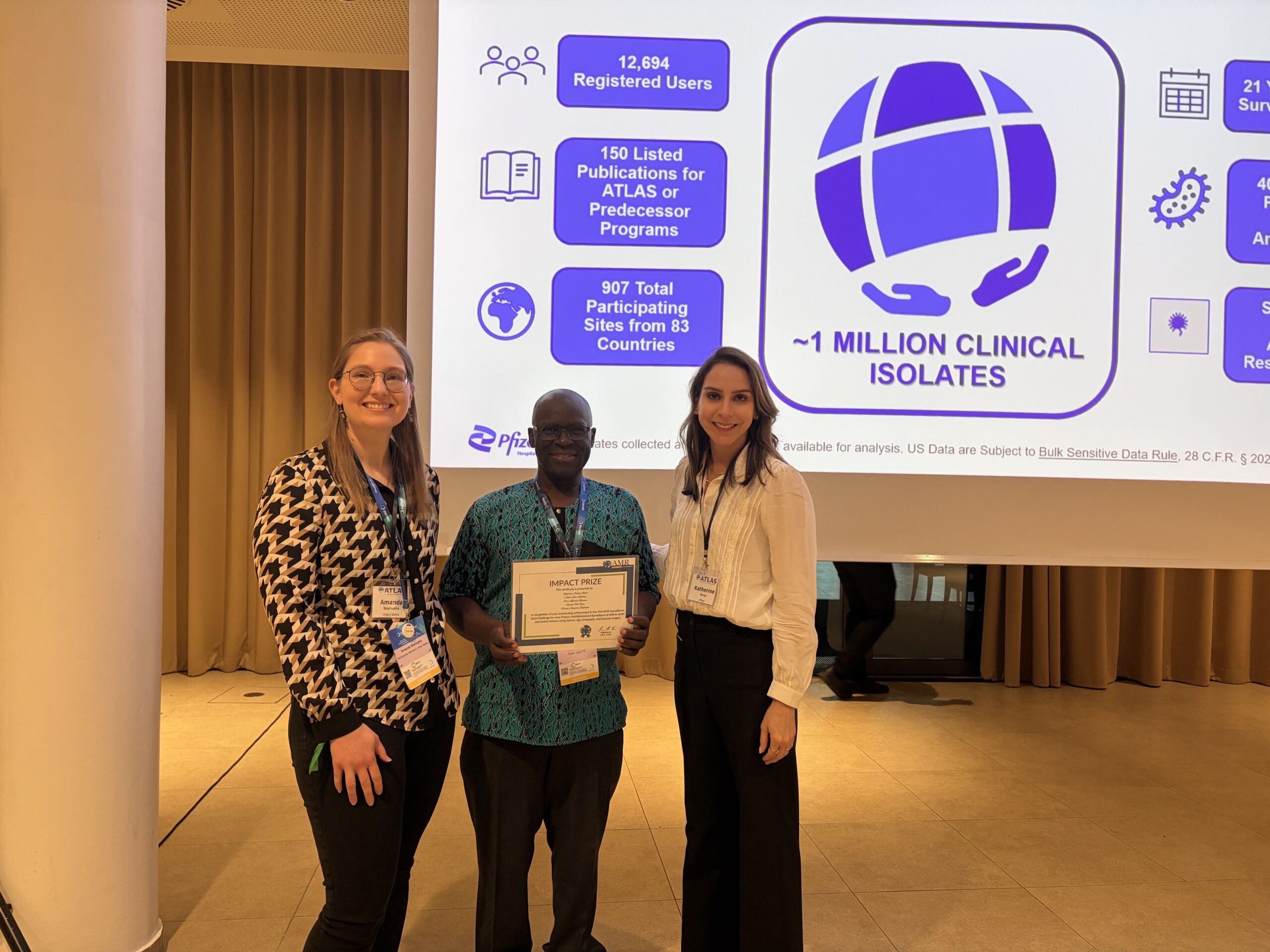


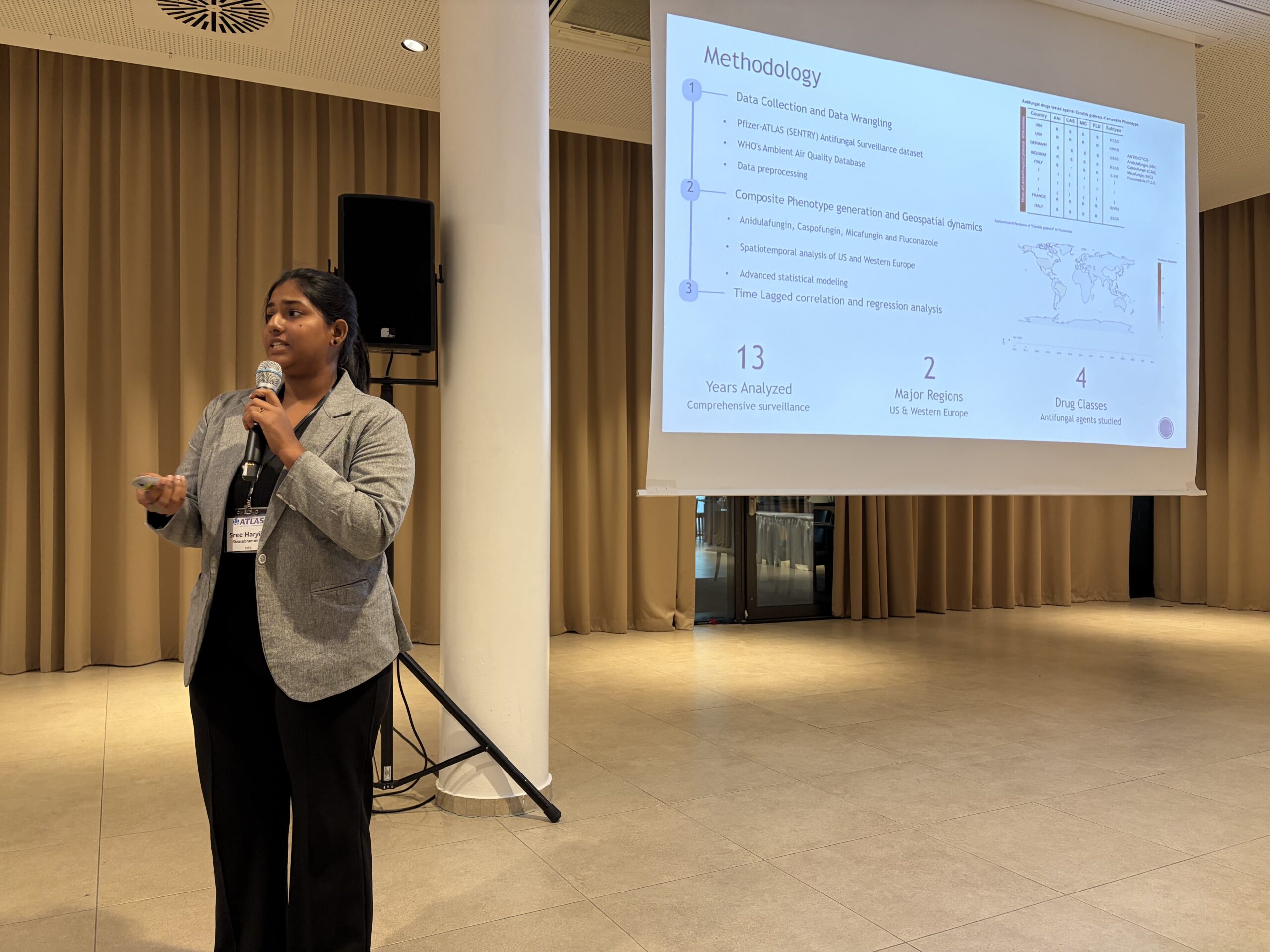
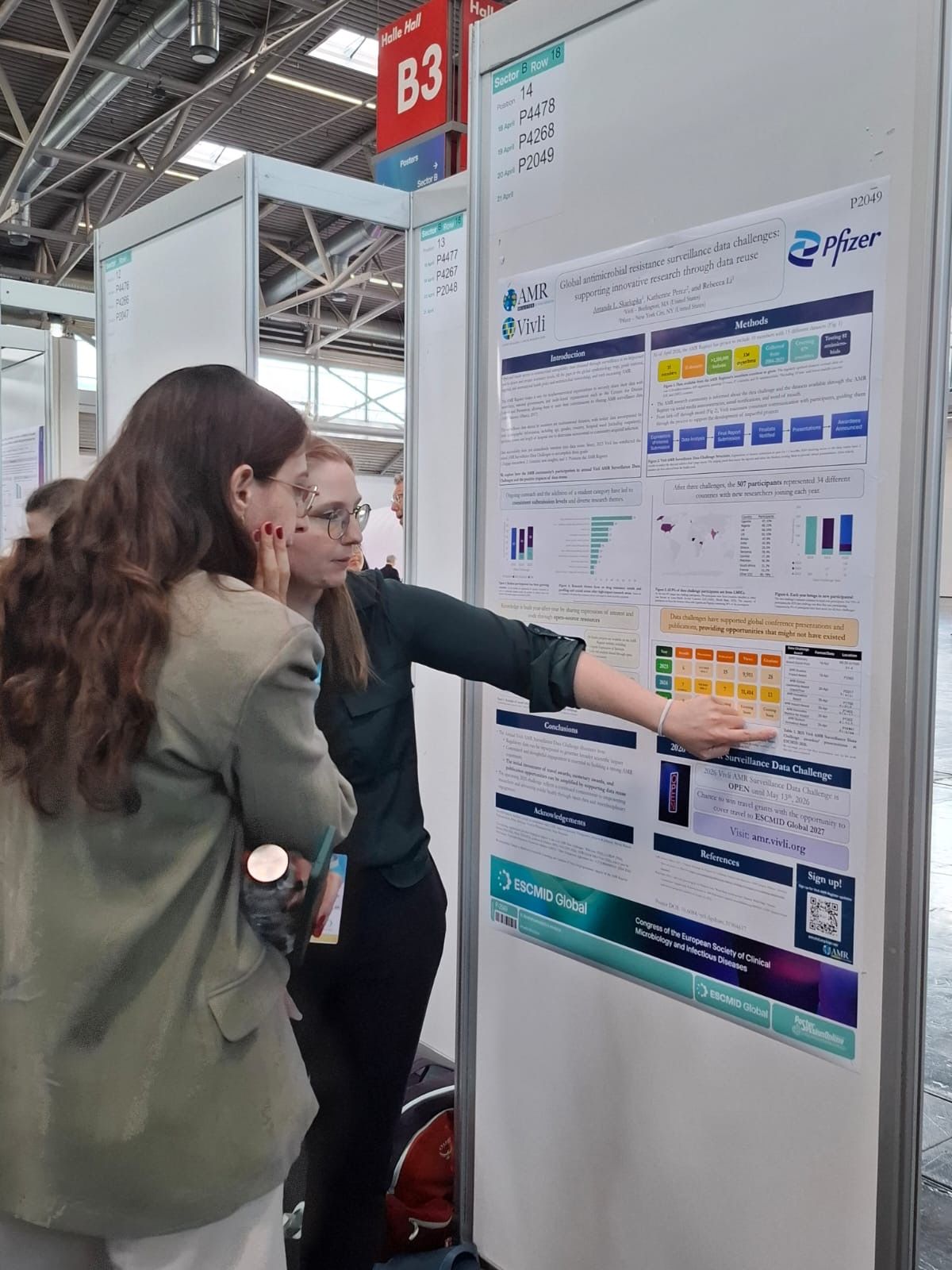

2025 AMR Data Challenge awardees presenting their work and receiving their awards at ESCMID Global 2026.
See all 2025 finalists and winning solutions →Global Reach
Where the data comes from, and who puts it to use
Left: the 89 countries whose isolates appear in the register’s datasets, de-duplicated by ISO-3 code (19 are low- or middle-income, World Bank FY2025). Right: the 65 countries whose researchers have requested data or entered the Data Challenge (58 lead-researcher countries, 46 Challenge-participant countries).
The register’s surveillance data is drawn from 89 countries across every inhabited continent, 19 of them low- or middle-income. Demand for the data is equally global and, if anything, weighted further toward the settings where the burden of resistance is greatest. Researchers from 65 countries have requested data or taken part in the Data Challenge, with Africa and Asia the most strongly represented regions. This pattern reflects the register’s role in placing shared surveillance data in the hands of the researchers who need it most.
Looking Ahead
Engage with the AMR Register
The AMR Register is built to expand access to surveillance data and enable its reuse in new research. Researchers can explore available datasets and apply for access through the Register, while organizations that hold AMR surveillance data can contribute datasets for responsible reuse. Organizations interested in engaging more broadly with Vivli can also learn more about membership.